


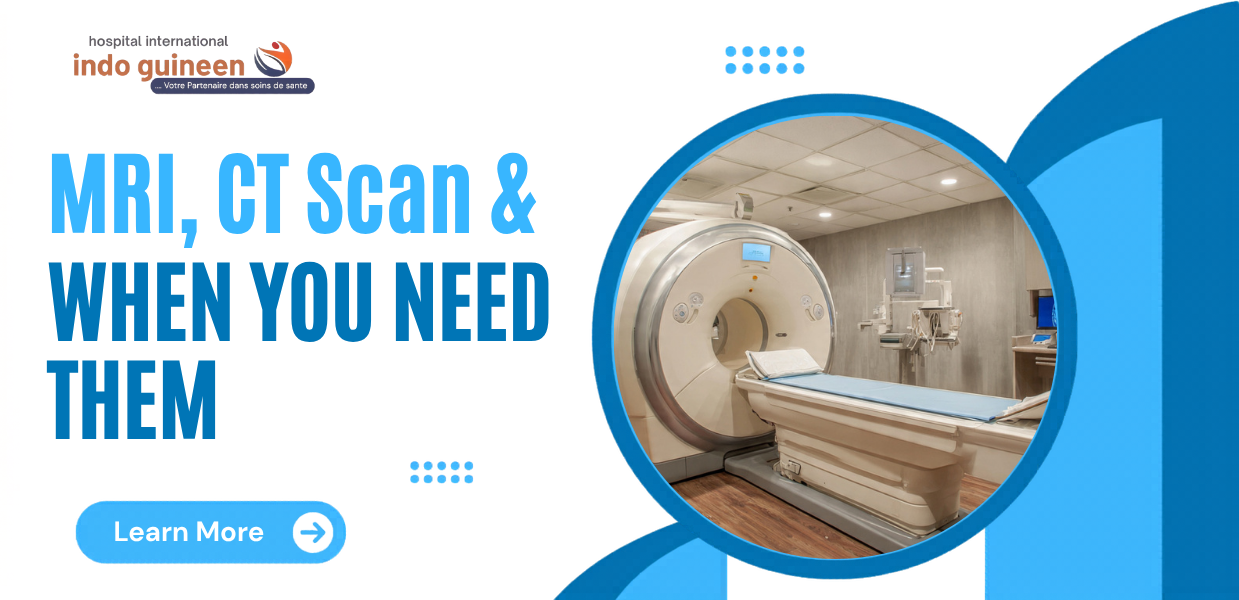
MRI, CT Scan & When you need Them
Medical imaging has transformed the way doctors diagnose and treat illnesses. Among the most commonly used imaging techniques are MRI (Magnetic Resonance Imaging) and CT (Computed Tomography) scans. While both provide detailed images of the inside of your body, they work differently and are used for different purposes. Understanding when you might need these tests can help you feel more informed and prepared.
What Is an MRI Scan?
An MRI scan uses strong magnetic fields and radio waves to create detailed images of organs and tissues inside the body. Unlike other imaging techniques, it does not use radiation.
MRI scans are particularly useful for examining soft tissues such as the brain, spinal cord, muscles, ligaments, and internal organs. Doctors often recommend an MRI for conditions involving the nervous system, joint injuries, or tumors.
Because MRI scans produce highly detailed images, they are ideal for detecting subtle abnormalities that may not be visible through other imaging methods.
What Is a CT Scan?
A CT scan combines X-rays with computer technology to produce cross-sectional images of the body. It is faster than an MRI and is commonly used in emergency situations.
CT scans are especially effective for viewing bones, detecting internal bleeding, and diagnosing conditions in the chest, abdomen, and pelvis. They are often used to identify fractures, infections, and certain types of cancers.
Since CT scans use radiation, doctors typically recommend them only when necessary and when the benefits outweigh the risks.
Key Differences Between MRI and CT Scans
While both imaging methods are highly effective, they serve different purposes:
- Technology Used: MRI uses magnetic fields; CT scans use X-rays.
- Best For: MRI is better for soft tissues, while CT scans are better for bones and detecting acute conditions.
- Time Required: MRI scans usually take longer, whereas CT scans are quicker.
- Radiation Exposure: MRI does not involve radiation; CT scans do.
Understanding these differences helps doctors choose the most appropriate test based on your symptoms and medical history.
When Do You Need an MRI?
Your doctor may recommend an MRI if you experience:
- Persistent headaches or neurological symptoms
- Joint pain or sports injuries
- Suspected tumors or soft tissue abnormalities
- Spinal cord or brain-related issues
MRI scans are also commonly used for monitoring chronic conditions and evaluating treatment progress.
When Do You Need a CT Scan?
A CT scan may be required in situations such as:
- Emergency injuries or trauma
- Suspected internal bleeding
- Severe abdominal pain
- Lung infections or chest conditions
Because CT scans are fast and widely available, they are often the first choice in urgent medical situations.
Are These Scans Safe?
Both MRI and CT scans are generally safe when performed under medical supervision. MRI scans are considered safer for repeated use since they do not involve radiation. However, they may not be suitable for individuals with certain implants, such as pacemakers.
CT scans involve a small amount of radiation, but modern machines are designed to minimize exposure. Doctors carefully weigh the risks and benefits before recommending the test.
Final Thoughts
MRI and CT scans are powerful diagnostic tools that help doctors identify and treat a wide range of conditions. The choice between the two depends on your symptoms, medical history, and the area being examined. Always follow your doctor’s advice and don’t hesitate to ask questions if you’re unsure about why a particular scan is recommended.
Frequently Asked Questions (FAQs)
1. Which is better: MRI or CT scan?
Neither is universally better. MRI is ideal for soft tissues, while CT scans are better for bones and emergencies. The choice depends on your medical condition.
2. Are MRI scans painful?
No, MRI scans are painless. However, you may need to lie still in a confined space, which can feel uncomfortable for some people.
3. How long does a CT scan take?
A CT scan is usually quick and can be completed within a few minutes, making it ideal for emergency situations.
4. Is radiation from CT scans dangerous?
CT scans involve low levels of radiation. While generally safe, they are used only when medically necessary to minimize exposure.
5. Can I eat before an MRI or CT scan?
It depends on the type of scan. Some scans require fasting, especially if contrast dye is used. Always follow your doctor’s instructions before the procedure.

Comments (12)